
Merced, CA · Garage Door Service
How Merced's Heat and Older Housing Stock Wear Out Garage Doors
Merced homes built 1972-1998 carry springs and openers aged by decades of severe summer heat. Here's what that heat actually does to your door.
- Repairs & new doors
- Springs & openers
- Serving 4 nearby communities
The Problem
Most houses across Merced went up between 1972 and 1998, with the median landing around 1983. That means a lot of the springs, openers, and track hardware out there are either original to the house or are the first replacement a prior owner put in sometime in the 90s or 2000s. Garage doors don't fail because they're old in some abstract sense - they fail because the materials inside them have a service life, and a door built or last serviced in the Reagan or Clinton years has usually burned through it.
The specific failure point in this area isn't rust or humidity damage, the way it might be somewhere wetter. It's heat fatigue. Merced sits in a severe heat climate band, and a garage that isn't insulated or vented well can run well above outdoor temperature on a summer afternoon. Steel torsion springs are rated for a number of cycles, and that rating assumes a normal operating range - not a box that regularly bakes in triple digits for months at a stretch. Heat doesn't just make the metal hot. It accelerates the breakdown of the temper in the spring itself, so a spring that might've lasted another five years somewhere cooler gives out early here.
What Local Conditions Do
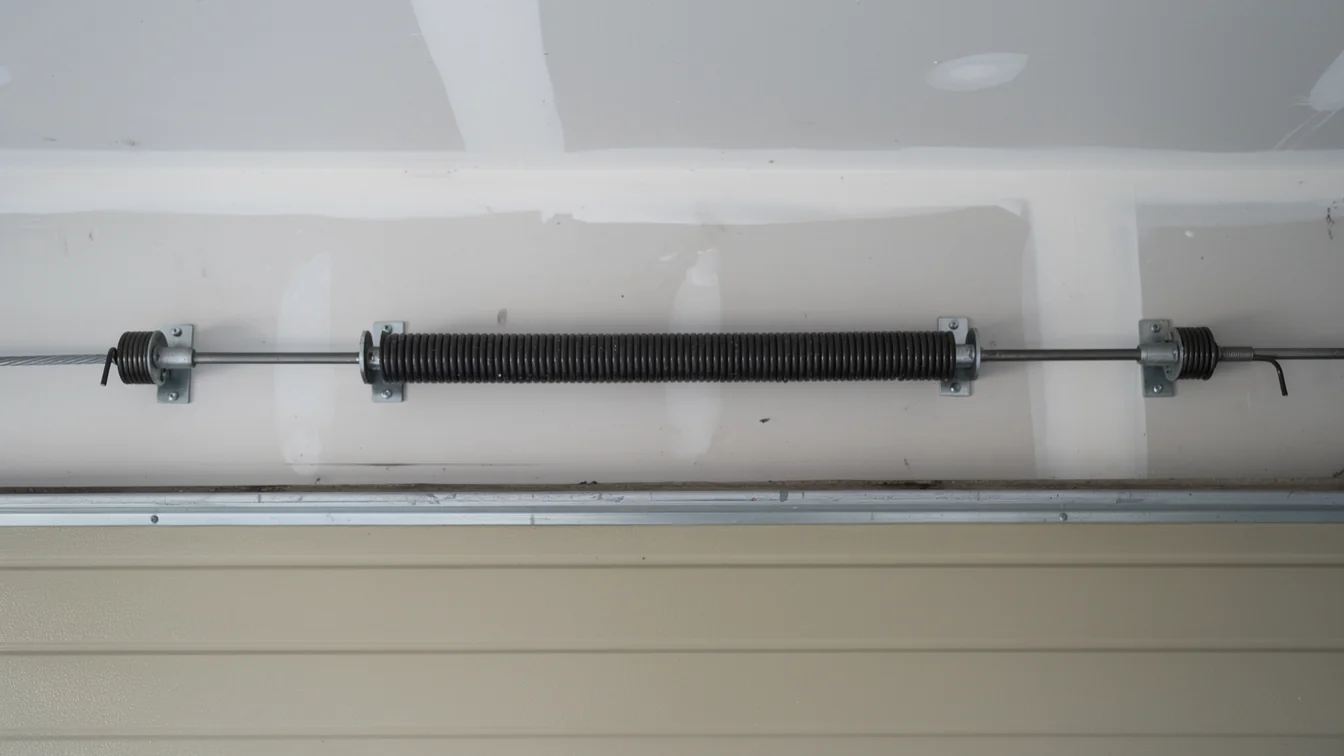
Heat attacks a few parts specifically. Torsion springs lose temper faster when they cycle hot day after day, which is the main reason a 1980s or 90s door in this area tends to need its first or second spring replacement sooner than the manufacturer's rated cycle count would suggest. The factory lubricant on the coils also breaks down faster in sustained heat, so springs that aren't re-lubricated start grinding against themselves and wearing unevenly.
Opener gearing is the other weak point. Older chain-drive openers from the 1980s and 90s stock common in this area use plastic gears that were never designed for a garage that regularly sits above 100 degrees for hours. Those gears get brittle and strip. PVC or nylon rollers do the same thing - they warp slightly out of round when they get hot enough, which you'll feel as a rhythmic thump every time the door moves, even before anything actually breaks.
None of this is Merced being unusual for the sake of it. It's what severe, sustained summer heat does to hardware that was installed thirty or forty years ago and may never have been serviced since.
Leaving It Alone
A spring that's lost temper from years of heat cycling doesn't usually give you much warning. It might get a little slower, a little noisier, and then one day it lets go - often on a hot afternoon when the metal is already under more load than usual. On a door with original 1970s or 80s hardware, that's not a minor inconvenience. A broken torsion spring on a door that heavy means the opener is suddenly carrying the full weight of the panel, which can strip the gearing in the same afternoon, or worse, let the door drop fast if someone's underneath it.
We won't tell you every noise means an emergency. Some of this stuff, like a slightly warped roller, you can live with for a while - it's annoying, not dangerous. But a spring that's visibly stretched, gaps between the coils, or rust forming at the stress points on hardware that's been through thirty summers of heat cycling is a different situation. That's load-bearing failure waiting on a trigger, and the trigger is usually just another hot day.
When to Call Someone
If your house falls in that 1972-1998 range typical of this area and nobody's touched the spring system, that's worth a look regardless of whether anything sounds wrong yet. We'll tell you plainly if a door is a lubrication-and-adjustment job or if the spring and roller hardware is past the point where patching it makes sense - on original-era hardware, replacement is often the more honest answer than another repair.
We don't do structural garage conversions or address full electrical rewiring for openers - that's outside what we handle, and we'll say so if it comes up. For the spring, track, roller, and opener side of things, especially on a door that's been running on its original hardware through years of Merced summers, that's exactly the call to make before the day it fails instead of after.
Frequently asked questions
Why does my garage door spring keep breaking in the summer?
Merced's severe summer heat accelerates temper loss in torsion springs, especially on doors from the 1972-1998 housing stock common here that haven't had the springs replaced. Heat cycling wears the metal faster than a normal duty cycle assumes, so springs give out sooner than their rated lifespan.
My garage door opener grinds and sometimes skips. Is that heat related?
It can be. Many 1980s and 90s openers use plastic gearing that gets brittle in sustained high heat, which leads to stripped teeth and skipping. If your opener dates to that era and the garage runs hot, that's a likely cause worth checking before the gear fails outright.
Do I need to replace the whole door or just the hardware?
Depends on the door. If the panel itself is sound but the spring, rollers, or opener gearing have worn out from heat cycling, hardware replacement usually makes more sense than a full door swap. We'll look at the actual wear before recommending either one.
Related garage door services in Merced
More garage door guides
Book garage door service in Merced
Call now or request a quote - tell us what the door is doing and where you are.